Designed a gig-work app for women, where the hard part isn't finding jobs, it's deciding to start.
The barrier isn't doing the work. It's deciding to start.
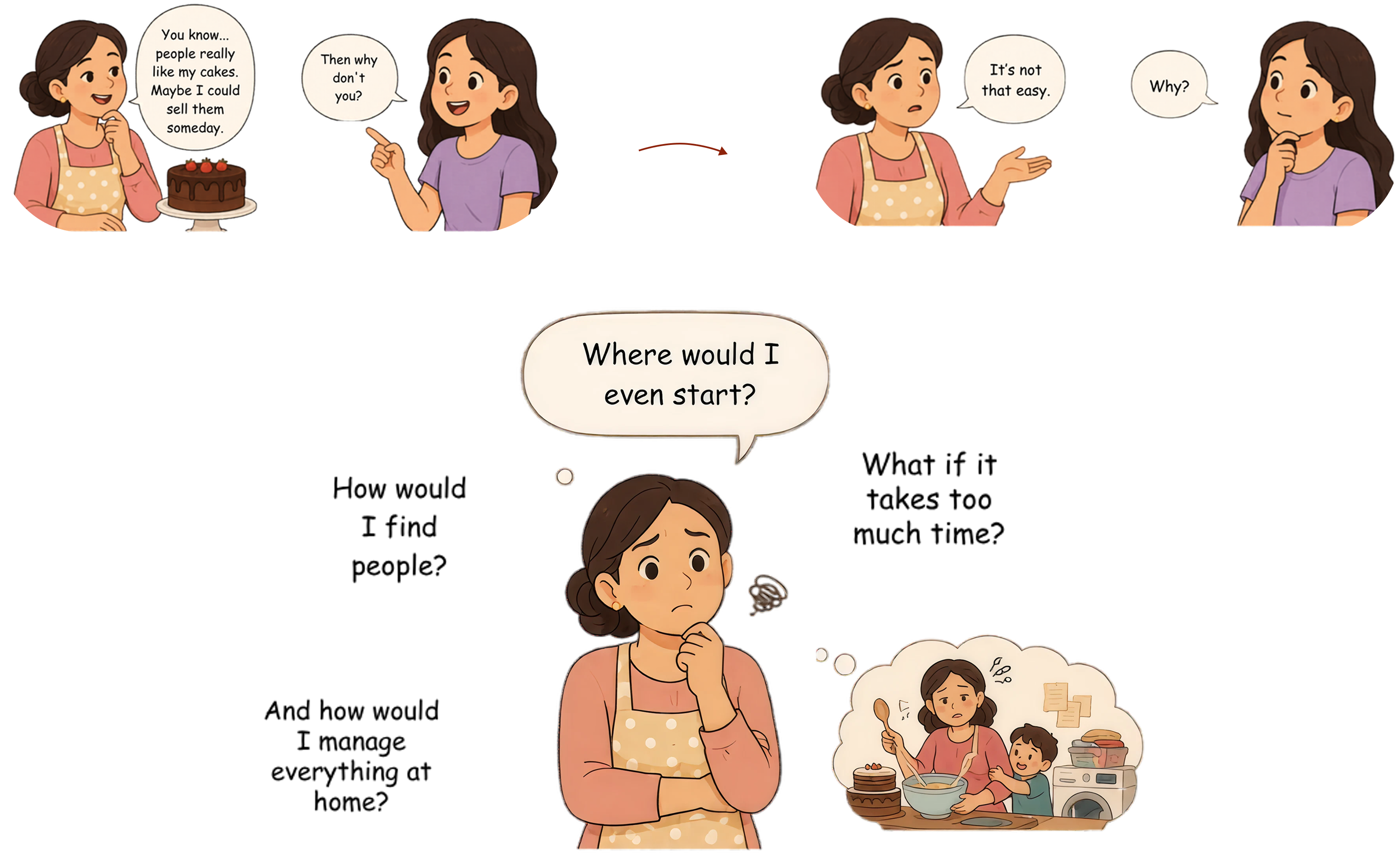
This project didn't start as a brief, it started as a byproduct of another one. While researching Rapido's part-time driver experience, a different pattern kept surfacing: for a woman to even think about starting gig work, so many obstacles exist before she does anything at all. Not friction in the job itself, friction in the decision to attempt it.
A conversation with my mother followed soon after, about wanting to sell something she was already good at making, and not knowing where to even begin. That made the pattern personal, not just something I'd read about. The data came after, to confirm it wasn't just a hunch.
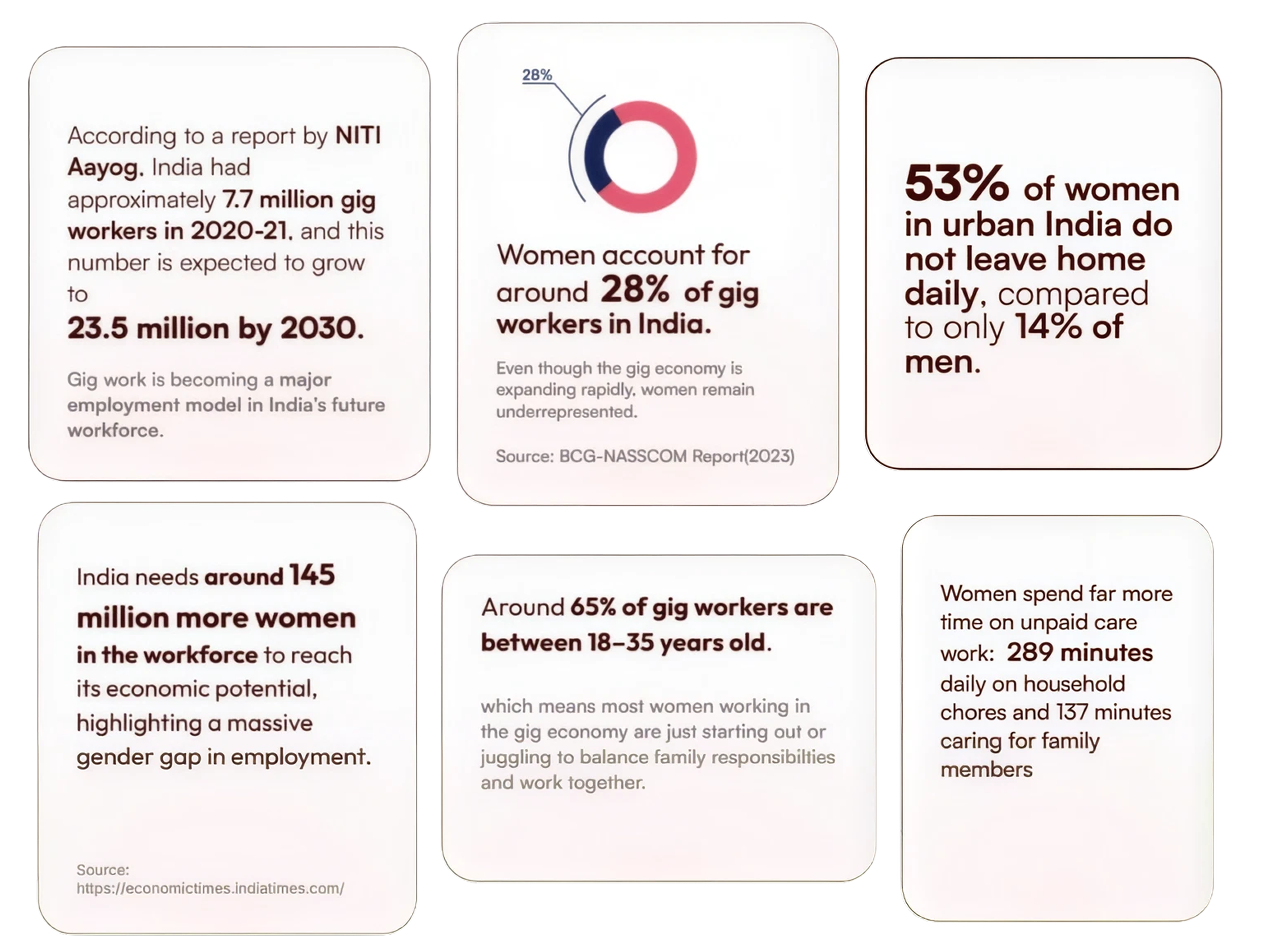
The gig economy is growing. Women are still largely outside it.
How might digital gig platforms better support women workers?
That was the question I started with, broad on purpose, before any research narrowed it down.
Three to four real conversations, deliberately not all from the same world.
I interviewed women across two very different contexts: some doing gig work through apps like Urban Company, others working informally around their own community, never on a platform at all. That split mattered, their relationship to technology, trust, and flexibility weren't the same.


 Hover to expand
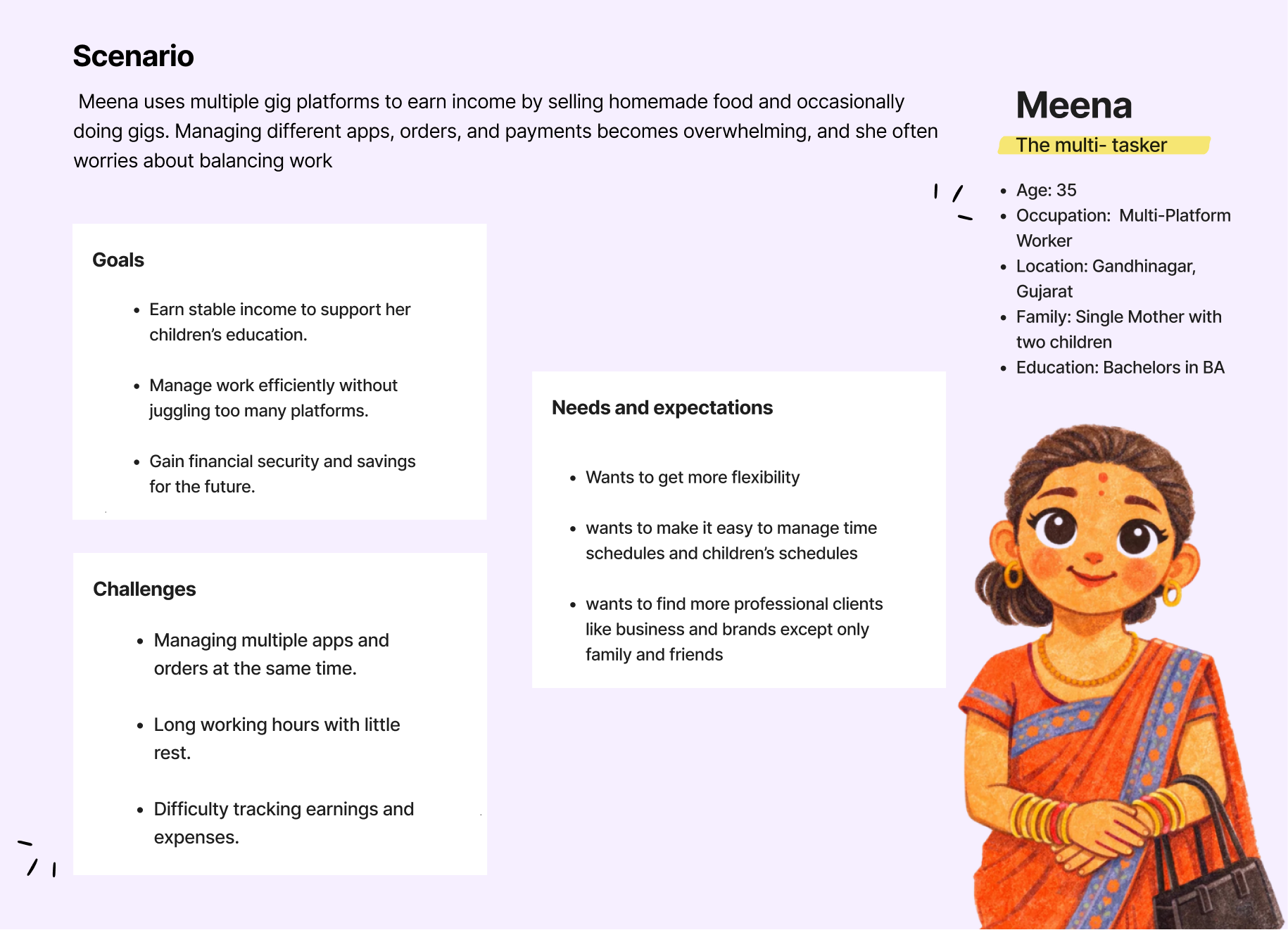
Juggles multiple gig platforms selling food and doing odd jobs. Managing different apps, orders, and payments becomes overwhelming.
 Hover to expand
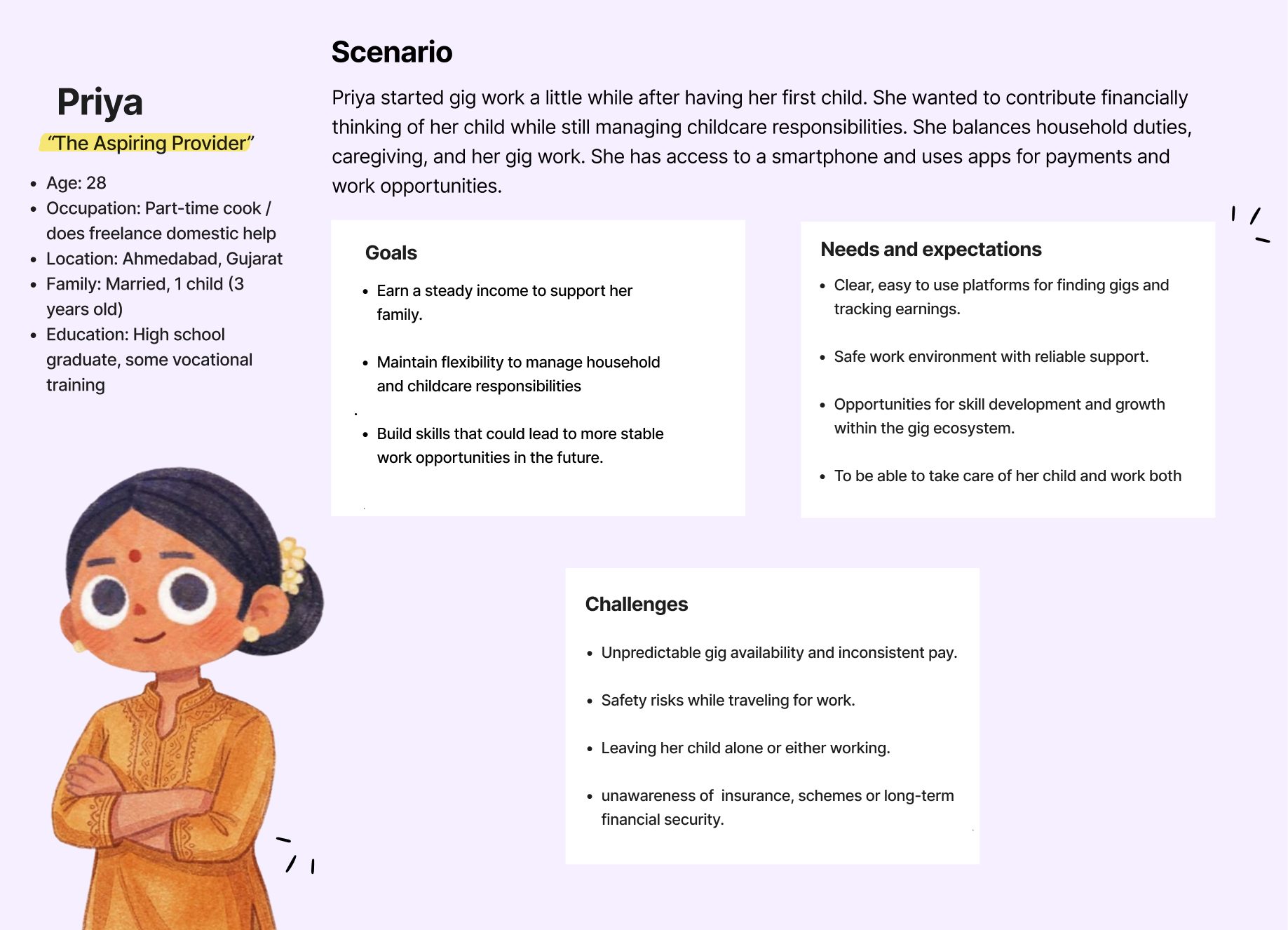
Started gig work after her first child, balancing caregiving with earning, using her phone for both work and payments.
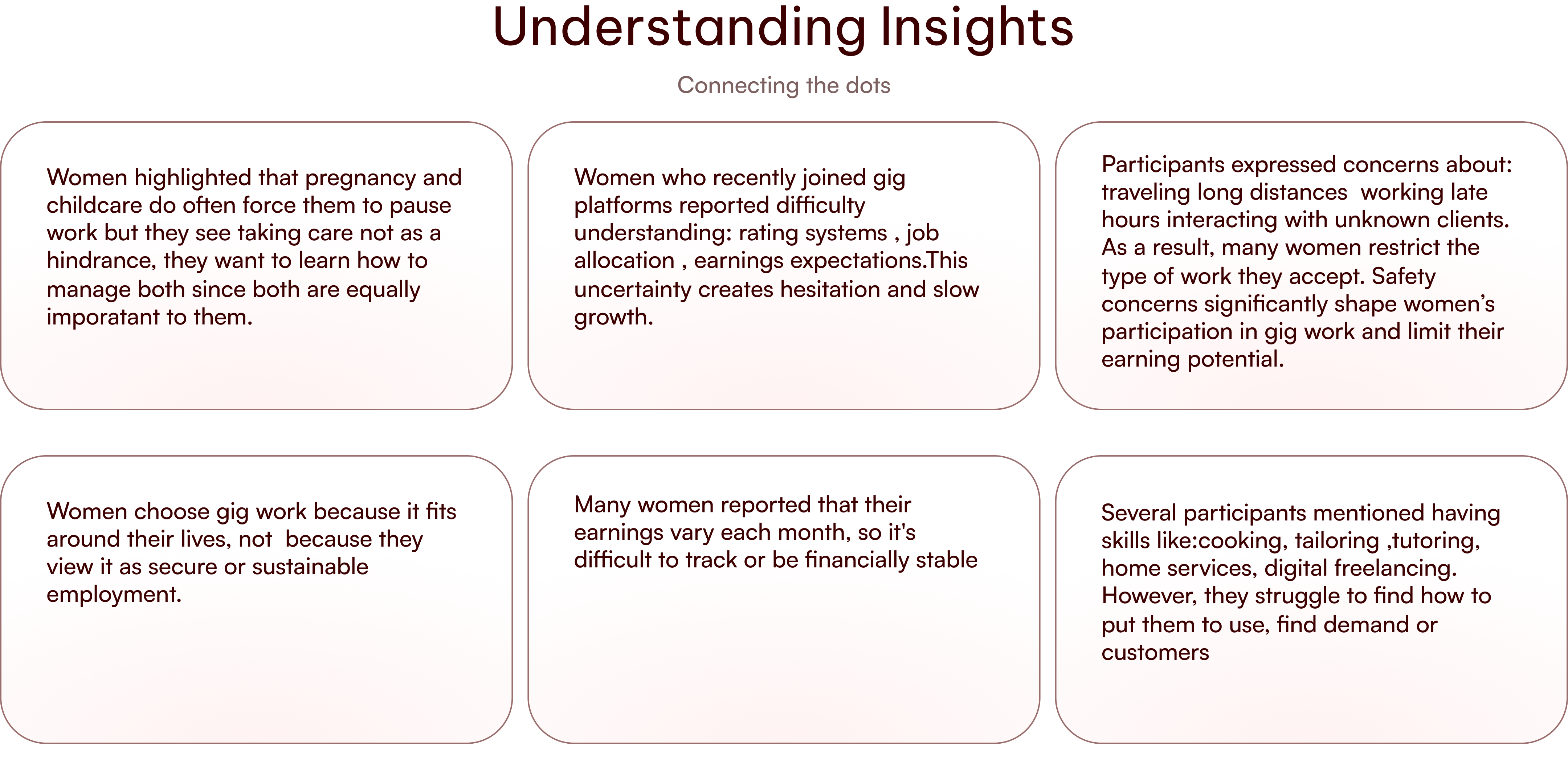
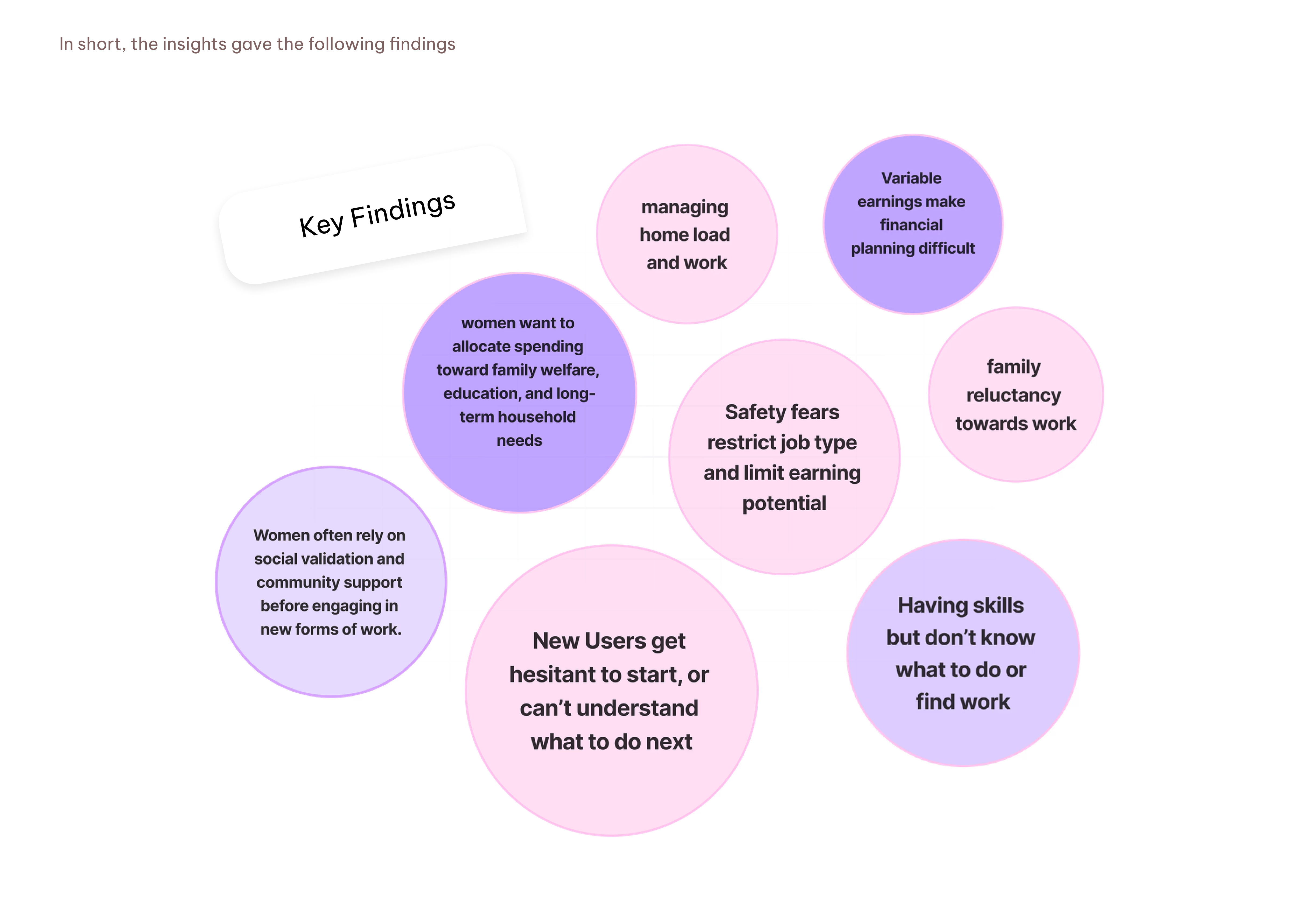
Six interviews and a stack of reports, clustered into patterns.
Pregnancy and caregiving pausing work without women seeing it as a burden, new users confused by ratings and job allocation, safety concerns limiting which jobs women would even consider, and income too irregular to plan around.
SITHA, SHECO, and Gigin all solve access to jobs. None of them solve trust.
All three existing platforms help women find work, some are even built specifically for women. But none of them address why a woman hesitates before she starts: not knowing who she'd be working for, not having flexible time around caregiving, and no real path to paying businesses or clients beyond one-off gigs.
Problem Space
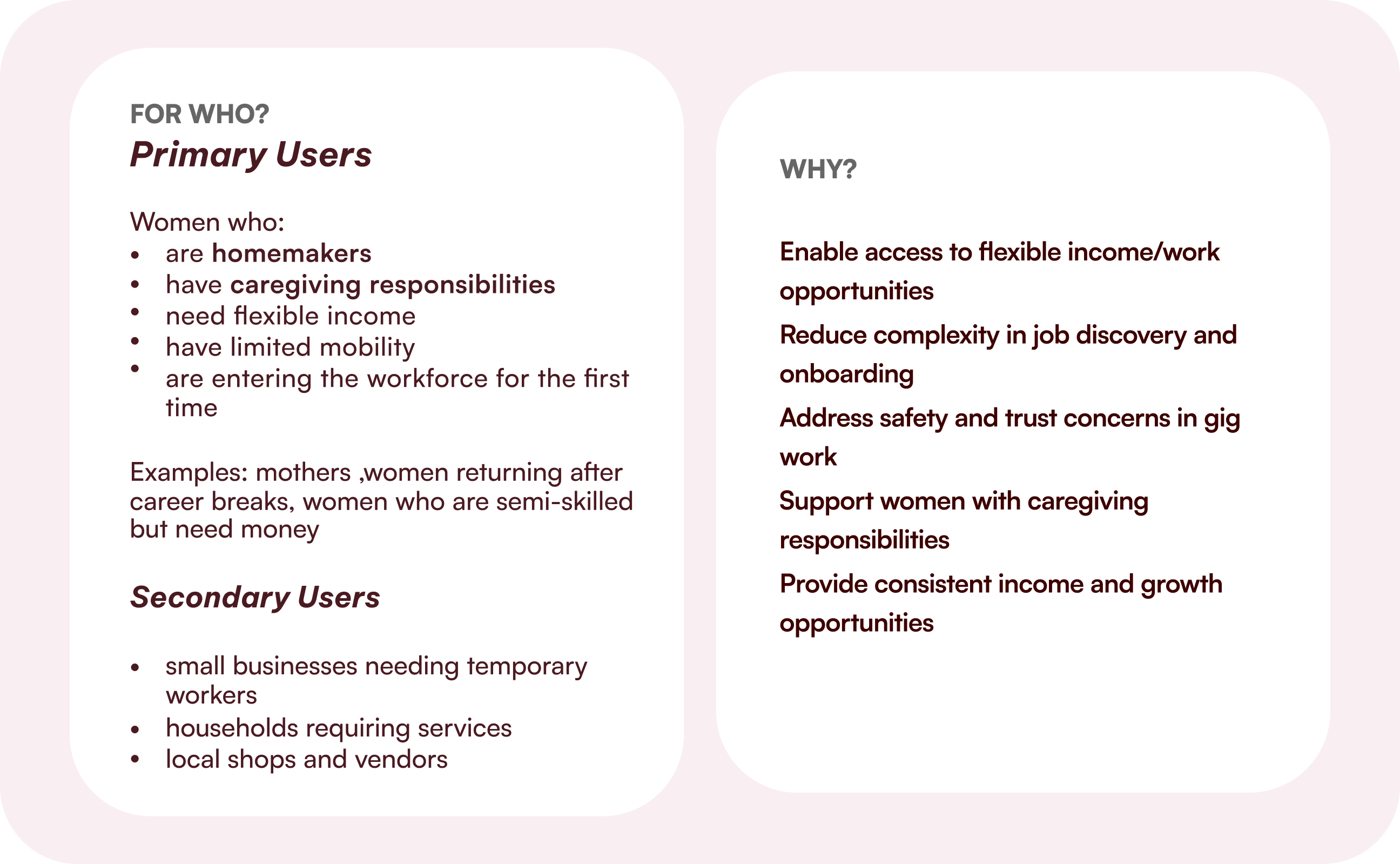
While many women possess valuable skills, they often remain excluded from the workforce due to limited access, safety concerns, and lack of structured platforms that understand their realities.
Solution
Saheli is designed to bridge the gap between semi-skilled and household women and meaningful work opportunities.
The platform acts as a support system that connects women to flexible, home-based, nearby, and trusted work opportunities while also helping them manage their time, earnings, and responsibilities.
By simplifying onboarding, enabling voice-based profiles, and building a community layer, Saheli reduces barriers that typically prevent women from participating in digital work.
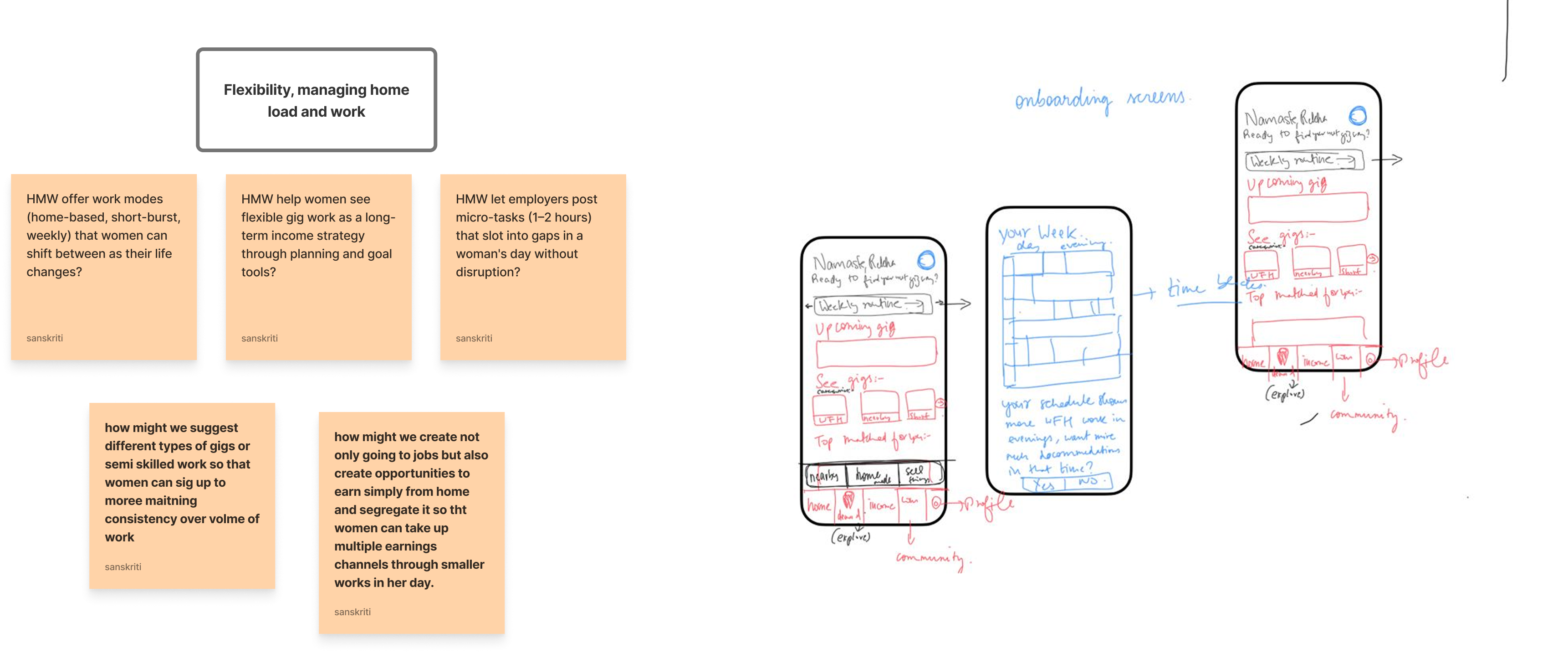
How Might We & Ideation
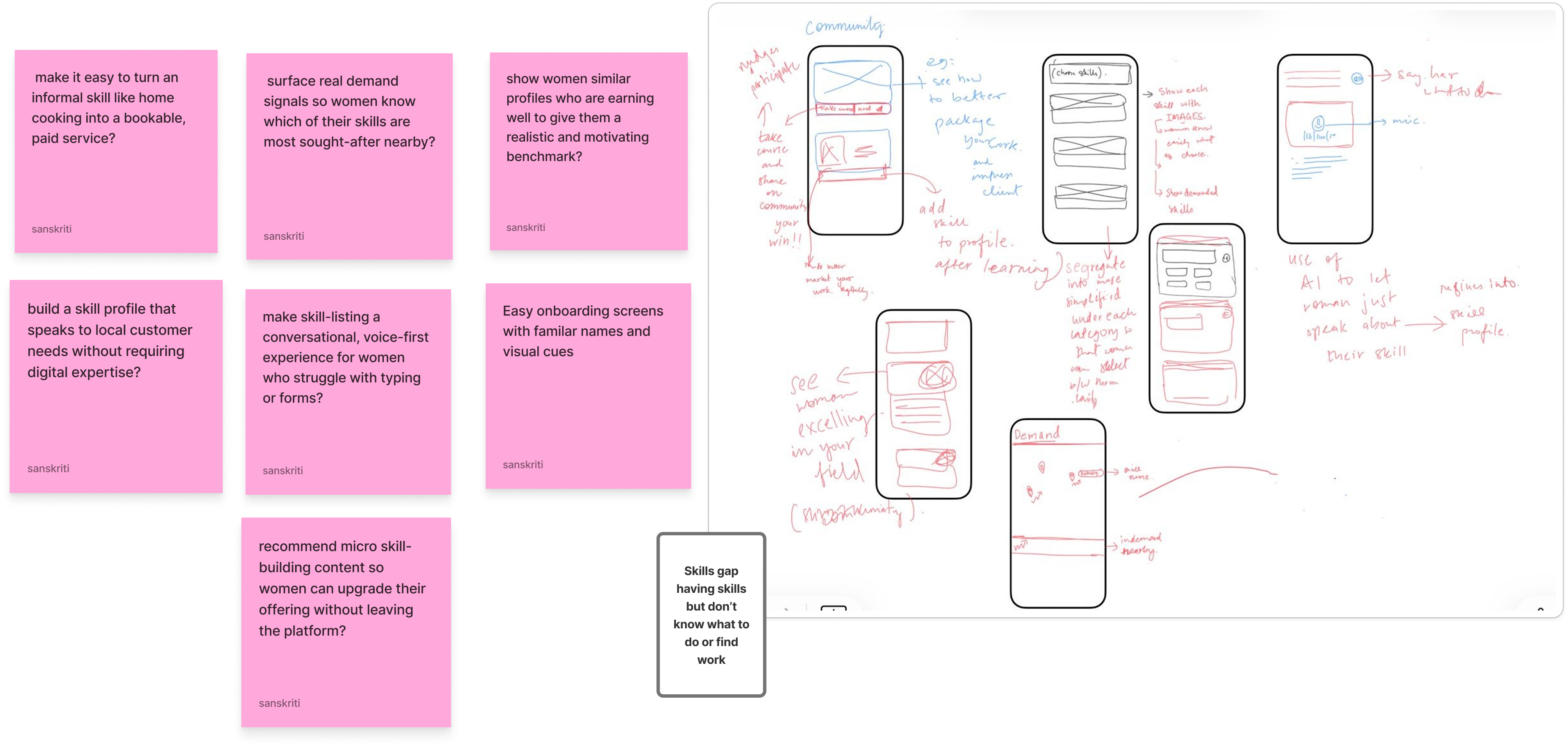
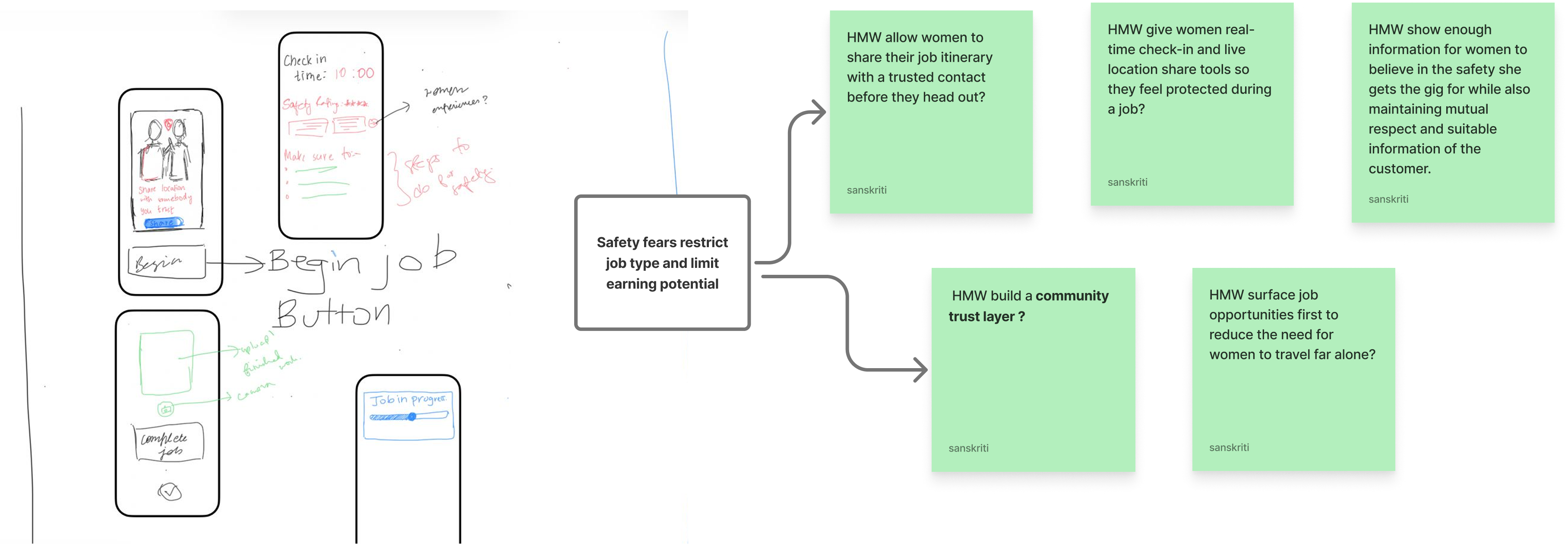
Three pillars, each answering a different part of why women weren't starting.
Peer mentors matched by skill area, a community feed for safety tips and encouragement, and a verification step built around who's actually signing up.
Visual-first skill selection and a voice-based profile builder, designed for women who may not be fluent readers or comfortable typing long forms.
Work modes built around real life, home-based, short-burst, or weekly, so gig work bends around caregiving instead of competing with it.
The Flow: how the app will work
Why the profile builder talks instead of asking you to type.
Writing a long profile is slow and intimidating for a first-time or low-literacy user. Before landing on voice, I weighed two simpler alternatives.
Tap-only presets and icons, no typing or speaking at all.
Short pre-written template sentences a woman could just select.
A conversational, voice-first profile builder.
Neither simpler option could capture the kind of detail that actually sells someone's skill, Priya describing fifteen years perfecting North Indian recipes isn't something a preset tag can hold. That held up against what the interviews showed too: women spoke naturally about their experience far more easily than they'd have written it down.
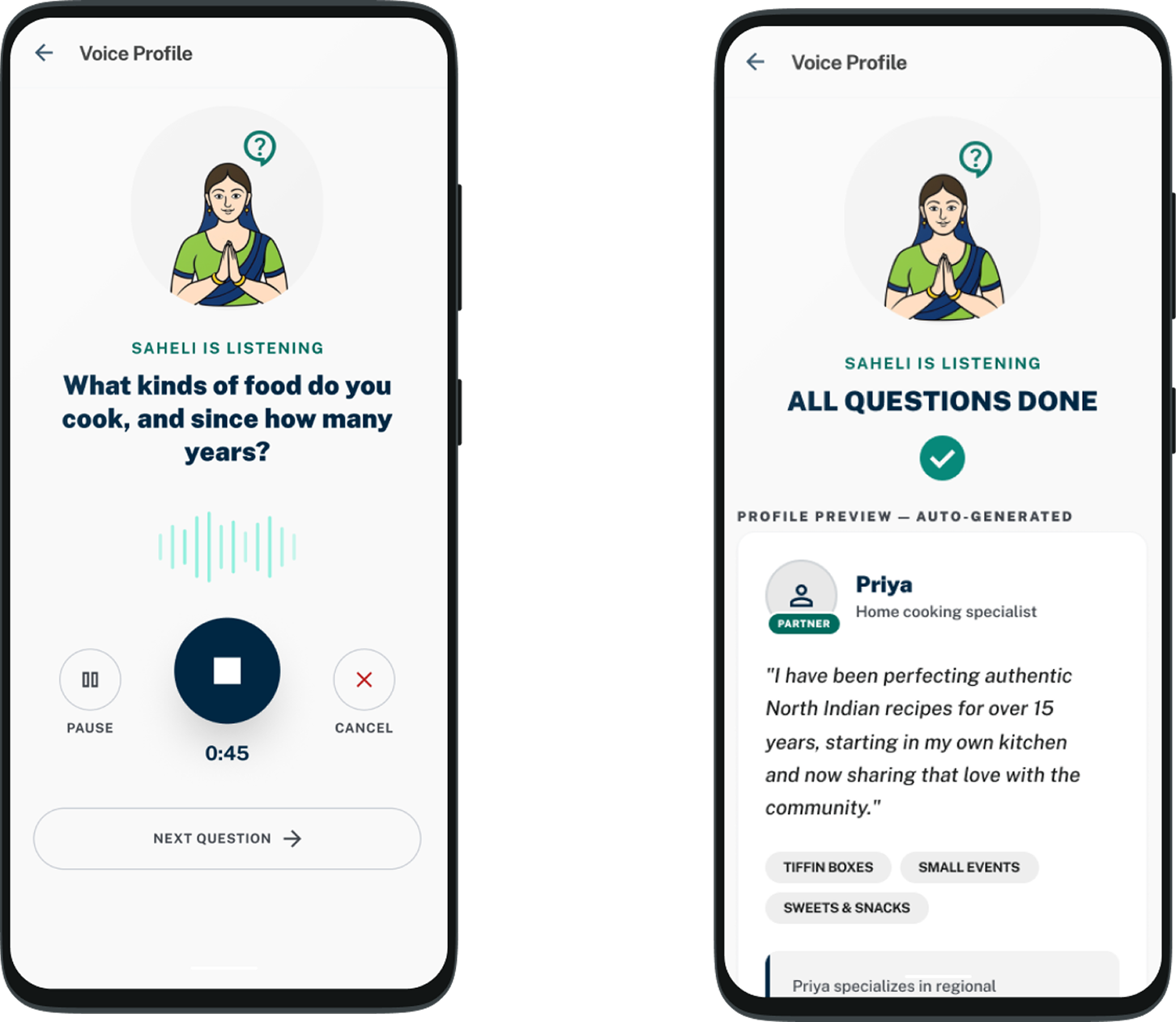
I am currently working more in-depth on this onboarding flow for low digital literacy users, as a separate project, with feedback from my faculty.
Confirming who's actually signing up was my own call, not a tested one.
Saheli is built around being a safe space for women specifically. The onboarding flow includes a selfie step to confirm the person signing up is a woman, alongside Aadhaar verification and a biometric thumbprint before payouts begin. That verification step was my own design judgment once I'd decided to build a women-only platform, not something validated by a specific external finding.
The flow itself names three real risks directly on the design: privacy fear around uploading identity documents, lack of real-time feedback if a photo gets rejected, and dead-end error messages that don't explain how to fix anything.
Fully designed, with a working prototype. Not yet tested with real users.
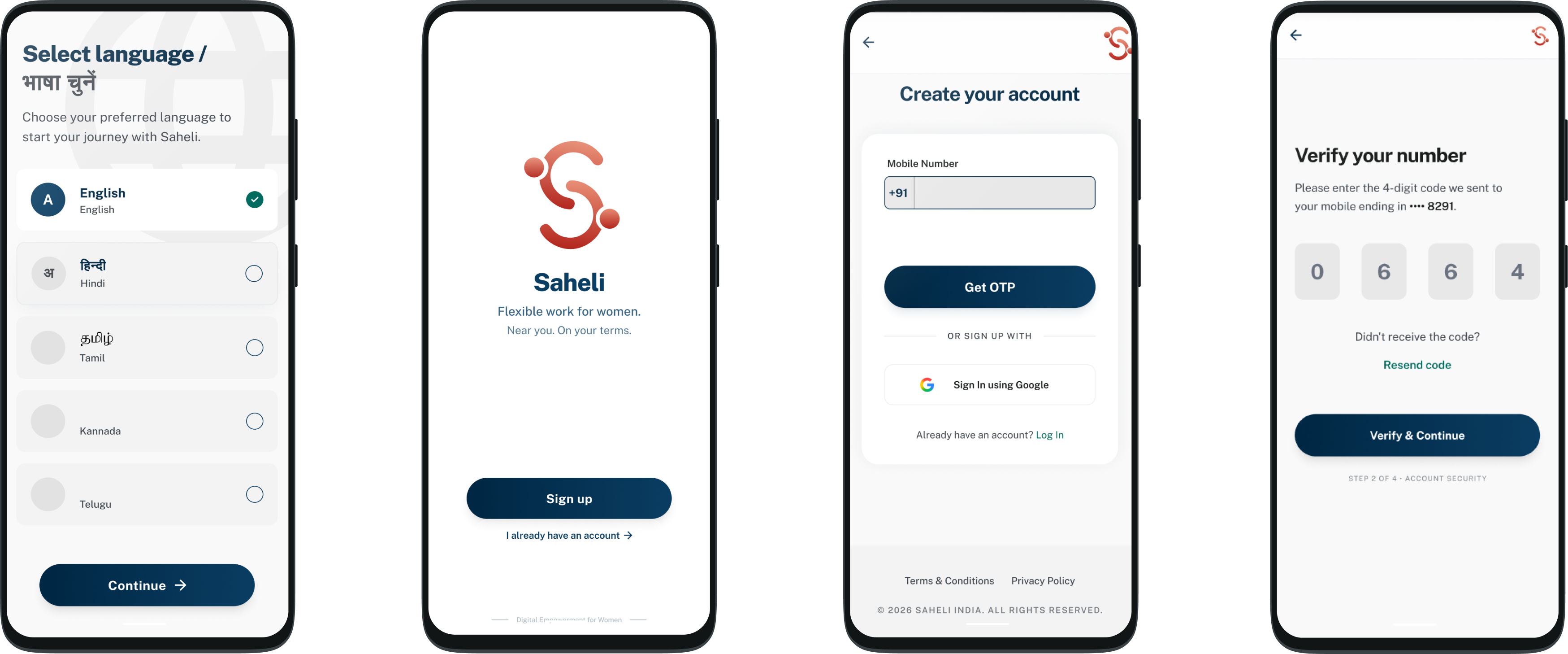
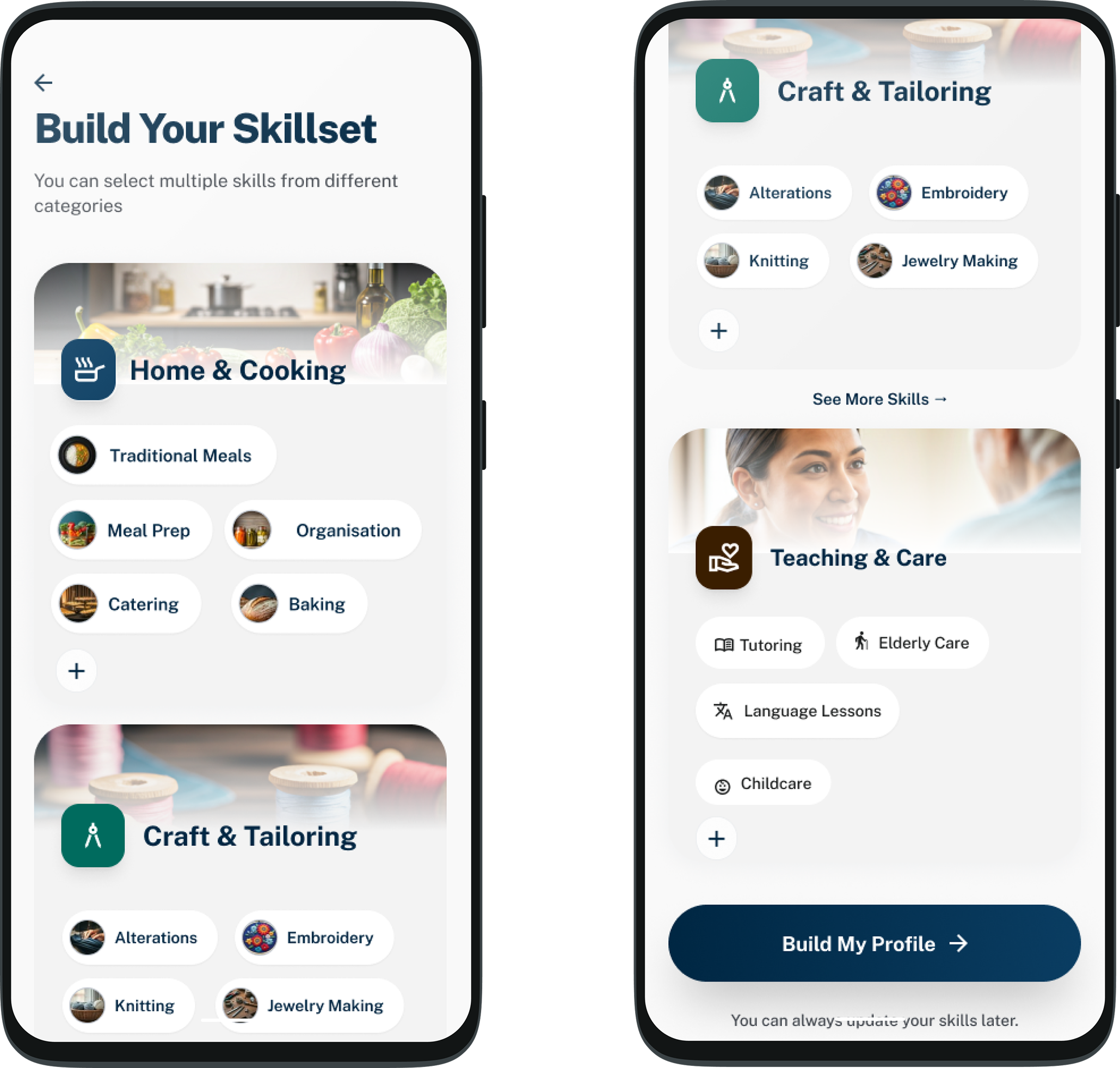
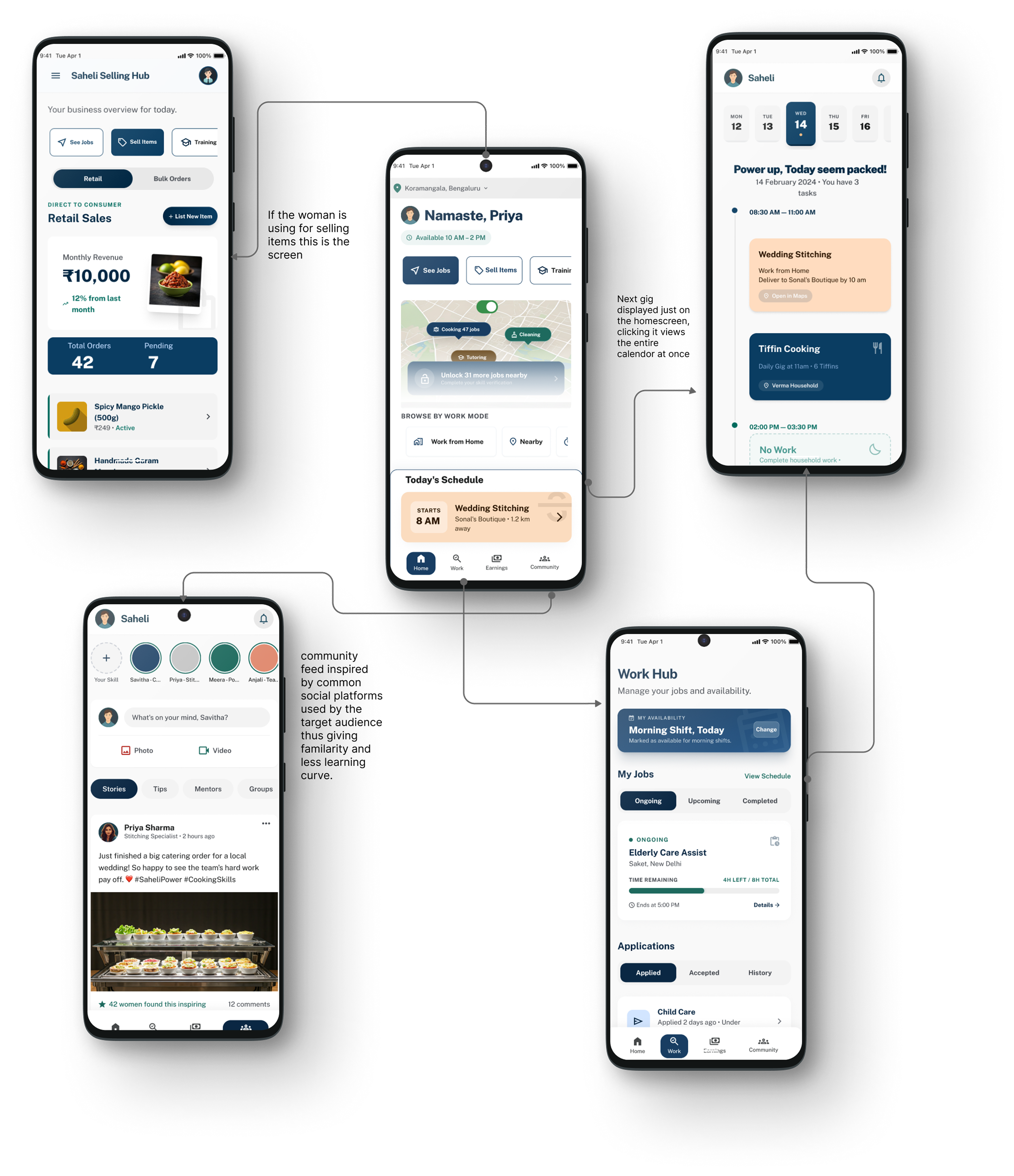
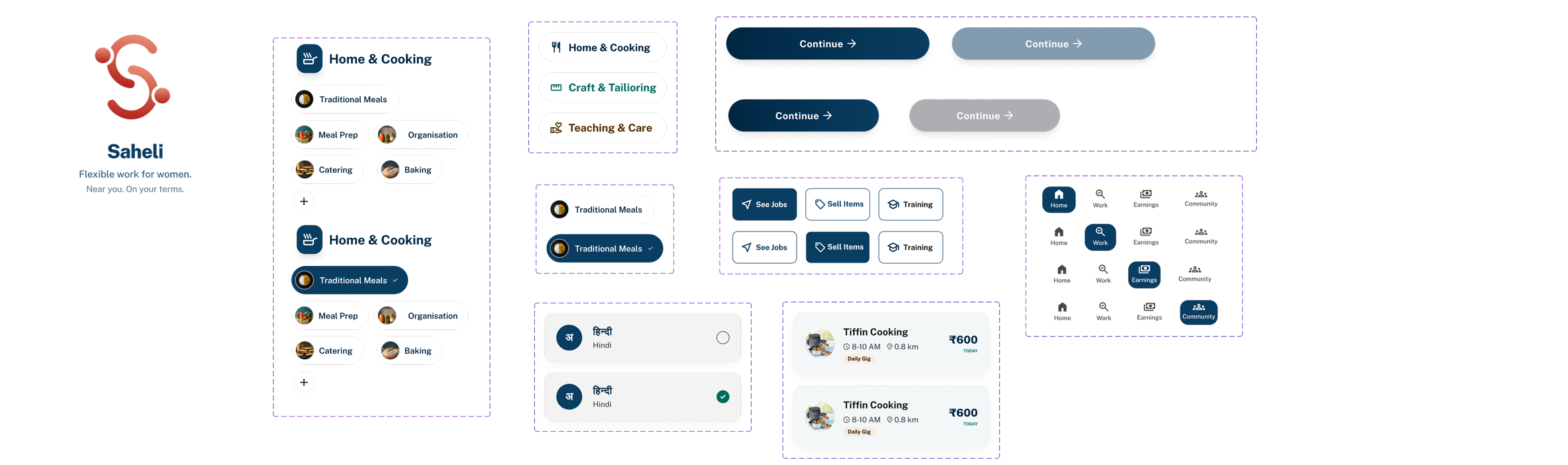
Saheli has a basic design system, final screens, and a clickable prototype in Figma. Usability testing with real users is planned for the next phase.
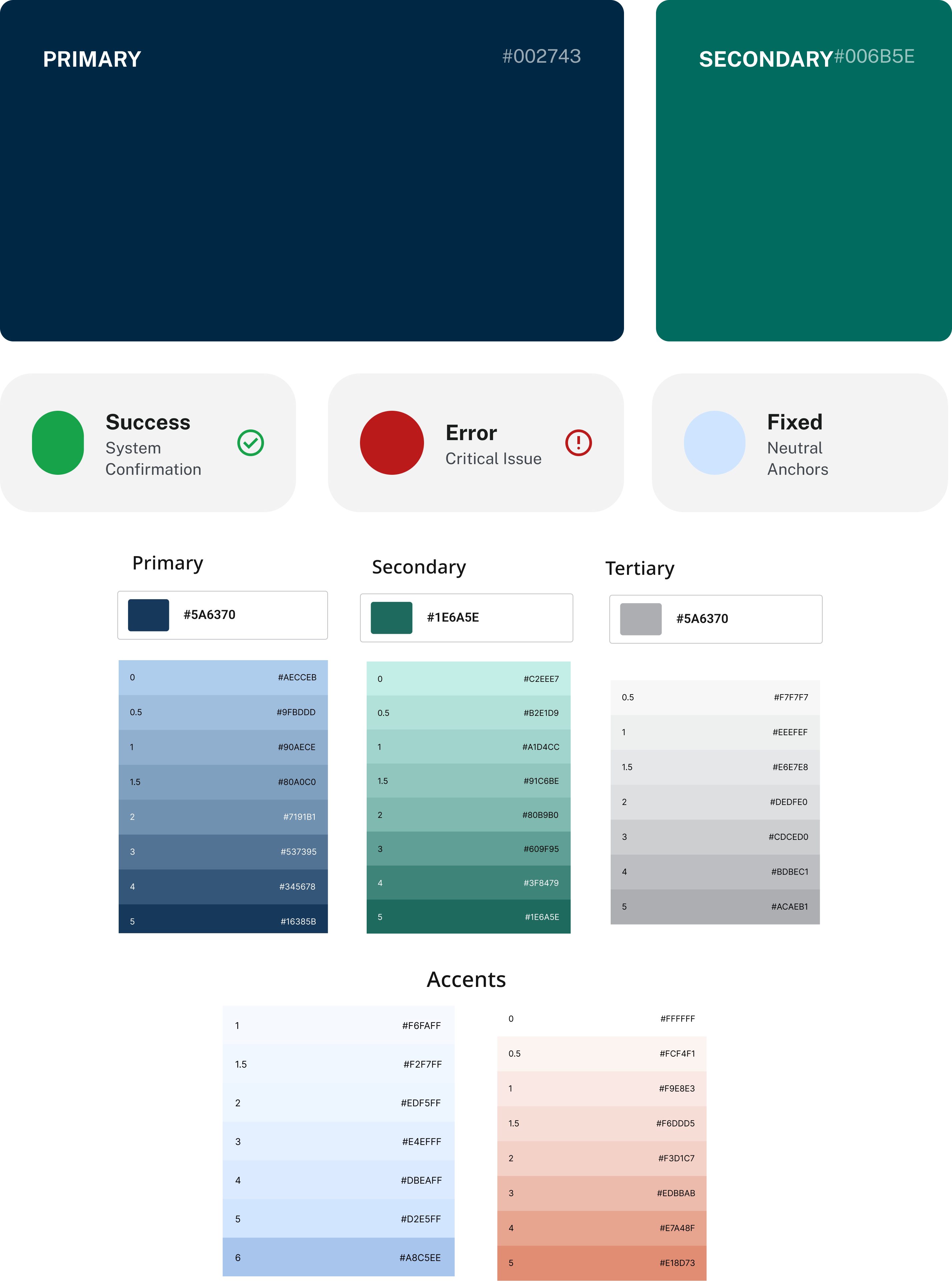
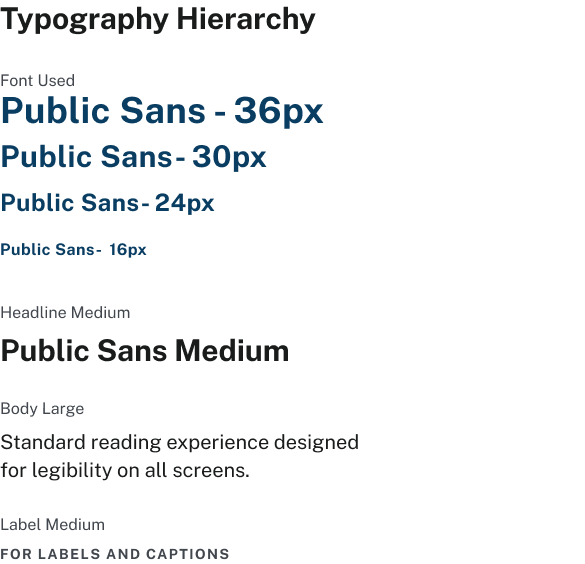
The hardest part of this project wasn't the interface. It was the decision to start.
That's true for Saheli's users, and it ended up true for the project itself, it began as a side observation in someone else's research, not an assigned brief. Following that thread into real interviews, real data, and a real design response is the part of this project I'm proudest of, more than any single screen in it.
Digital labour isn't gender-neutral.
While designing Saheli, the focus was on improving access to work for semi-skilled and household women. But the research pointed at something deeper: digital labour inherits the same offline inequalities it exists inside. Which work gets coded "feminine" and which gets coded "masculine" doesn't disappear just because it moved onto a platform, and neither does the unpaid care work sitting underneath all of it. It's common to see a man doing beauty or care work, cooking, cleaning. It's rare to see a woman driving an auto.
That opens a bigger question than the one this project answers: how might we build platforms that don't just grant access, but actually challenge and reshape those gendered boundaries in the first place?